

 For years, onPeak’s Compass Dashboard has been where clients go to understand how their event is performing. When it first launched, it was one of the first solutions of its kind, setting a new standard and earning industry recognition along the way. It brought critical event data together in one place, giving clients the visibility they needed to make informed decisions throughout the event lifecycle.
But as client expectations evolved and event data became increasingly important to day-to-day decision-making, we saw an opportunity to make the Dashboard even more powerful. Through surveys, feedback sessions, and ongoing conversations, clients told us they wanted quicker access to key insights, greater visibility into performance trends, and a more intuitive experience overall.
So we went back to what we do best: we listened. And what we heard wasn’t a request for more reports – it was a desire for faster access to insights, clearer visibility into performance, and a more streamlined way to explore the data that drives event decisions every day.
“This wasn’t a project where we started with technology. We started by listening. Clients showed us what questions they were trying to answer and how they wanted to interact with their data. Dashboard 2.0 is a direct result of those conversations.”
– Tayler Gilmartin, Director of Product Management, onPeak
From Snapshot to Strategy
We started with the questions our clients ask every day: How are we pacing? What’s changing? Where should we focus? These are the questions that drive planning conversations and help teams make informed decisions throughout the event cycle. Dashboard 2.0 brings those answers closer to the surface through a more connected experience.

At the center of that experience is Event Overview, the foundation of Dashboard 2.0. It brings together key metrics, trends, and performance indicators into a single, centralized view, making it easier to understand event performance at a glance and explore deeper insights when needed.
Event Pace makes performance trends easier to monitor and understand through flexible views, year-over-year comparisons, and clear visibility into changes as they happen. By bringing pacing data front and center, teams can quickly identify shifts and stay focused on key metrics.
Inventory Explorer gives clients greater control over their data, making it simple to filter, compare, and analyze information in real time. Intuitive visual indicators help highlight trends and opportunities, enabling teams to move seamlessly from insight to action.
Dashboard 2.0 also introduces Capture Progress, giving clients a clearer view of performance over time. By surfacing historical trends and benchmark comparisons, teams can better understand how attendee and exhibitor capture is progressing throughout the event cycle.
Beyond individual features, the entire experience has been thoughtfully redesigned. Navigation is cleaner, workflows feel more natural, and insights are easier to access and interpret. Every enhancement was built to help clients spend less time searching for information and more time acting on it.
 “Event pacing is one of the most important indicators we track, and Dashboard 2.0 puts that story front and center. The ability to compare performance and identify changes quickly has made our planning discussions much more productive.”
– Debbie Guthrie, CEM, VP Housing North America, Informa
And this is only the beginning. We’ll continue to ask questions, listen closely, and invest in the tools our clients depend on because the best solutions are built in partnership with the people who use them every day.
Looking for better insights into your event’s hotel performance, pacing, and inventory? Connect with onPeak to learn more about our event accommodations technology solutions.

 Artificial intelligence is quickly becoming one of the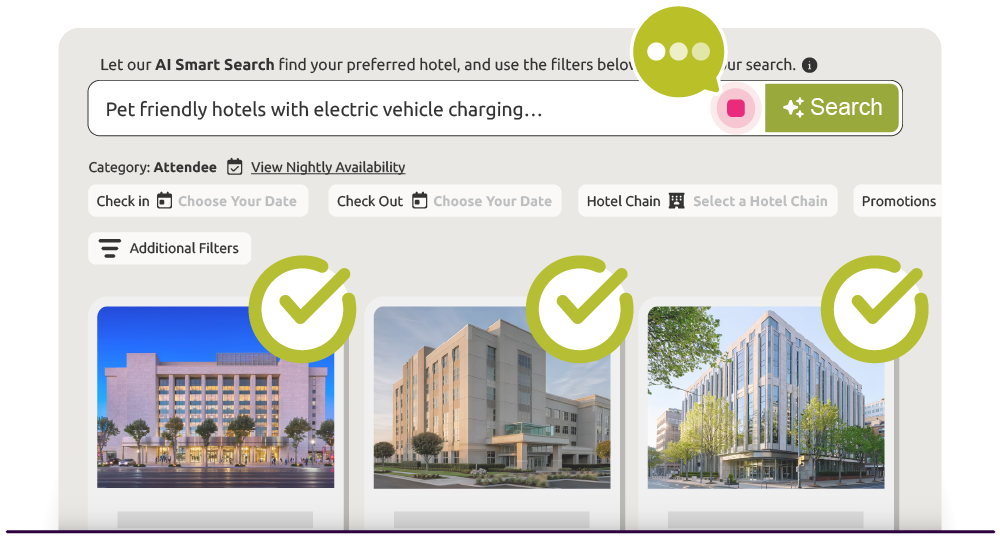
 The goal isn’t to automate everything. It’s to enable better decisions, stronger outcomes, and more meaningful work. As Tayler emphasizes: “AI helps clear the way so our focus stays exactly where we want it to be — on the clients and customers we serve.”
 Choosing the right host destination is never as simple as pointing to a place on the map. Today’s event organizers are evaluating more variables than ever, balancing logistics, attendee experience, travel realities, and long-term strategy. Yes, space and hotel rooms matter. But the real decision-making lens is broader, more nuanced, and increasingly data-driven.

 Does your internal team include someone well-versed in all things housing? (Realtors need not apply!) If not, consider this a must-have partnership. Working with an advocate dedicated to your needs — peak block, flow patterns, number of hotels, and which ones align with your attendees’ preferences — is vital. Equally important, your partner should be able to offer customized solutions to optimize your hotel blocks, enhance participant satisfaction, and deliver exceptional value.



 Adapting to the New Age of Fee Transparency
 “Customers can see the full price upfront. Whether you book your room online or through our contact center, at onPeak, our goal is to make the booking process as quick and seamless as possible. This law reinforces our commitment to providing our clients and their event participants with the best possible booking experience,” said John Hunt, onPeak’s Senior Director of Reservations Services.



 At onPeak, we’re committed to creating experiences that resonate beyond the present moment. Our recently released


 This year, we welcomed four associates to the onPeak family. They’ve been right there alongside our business development mentors and operations teams, learning the ropes of an event’s life cycle—from the initial sale to hotel contract negotiations, managing inventory, staffing the onsite housing desk, and wrapping up with post-event recap meetings. They’ve seen firsthand what makes onPeak’s service truly white-glove.