Editor’s Note: This article was originally published in September 2024 and was updated in November 2026 to reflect current event industry trends, hotel market conditions, and best practices.

Room Block Poachers Are Getting Smarter — Here’s How to Stay Ahead Right Now.
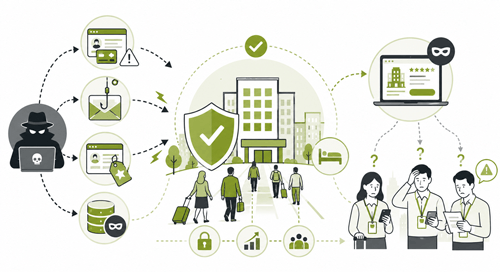 If you think room block poachers are the same old nuisance they’ve always been, think again. They’ve evolved — fast. And today’s scams are more sophisticated, more coordinated, and more damaging than ever. Event organizers are seeing a surge in deceptive practices that cost attendees money, drain staff time, corrupt data, and undermine the economic impact your event brings to its host city. In other words: poaching doesn’t just hurt your room block. It hurts your event’s future.
Here are the five biggest ways poachers are impacting events today — and why ignoring the problem is no longer an option.
1. Poachers Are More Aggressive Than Ever, and Their Tactics Have Real Consequences
Room block poachers aren’t just cold‑calling anymore. They’re running full‑scale operations using tactics like:
- Fictitious reservations and credit card fraud, leaving attendees stranded and financially exposed
- “Bait and switch” misrepresentations, offering inferior rooms or falsely claiming affiliation with your event
- Trademark infringement, using your event name, logo, and branding to appear legitimate
- Unauthorized data access, pulling attendee lists from hacked, leaked, or scraped sources
These aren’t harmless solicitations – they’re attacks that create confusion, damage trust, and harm attendees’ financial well-being.
2. Scammers Are Using Better Tech, and It’s Amplifying the Problem
Phishing campaigns targeting event attendees have surged. Criminals now mimic legitimate booking confirmations and urgent reservation alerts with alarming accuracy. Modern schemes include:
- Cloned hotel and booking portals that look identical to real ones
- Fake “your reservation is compromised” emails
- Urgent messages claiming rooms are nearly gone
These operations weaponize knowledge of hospitality workflows, often catching attendees off‑guard. When participants are exploited, the fallout reflects back on the event, even when the event was never involved.
3. Industry Authorities Are Sounding the Alarm
The Events Industry Council (EIC) continues to release guidance to help organizers combat piracy, including attendee alerts, cease‑and‑desist templates, and response frameworks. Their 2026 recommendations highlight a worrying trend: poaching activity is accelerating, not slowing. Key concerns include:
- The need for frequent communication, not just pre‑event warnings
- Poor data handling practices, which make attendee lists vulnerable
- The rising volume of suspicious booking traffic
These resources make it clear: the industry is treating poaching as a continued threat that undermines attendee safety and event integrity.
4. Poaching Distorts Your Block and Undercuts Your Event’s Economic Value
Poachers don’t just steal rooms. They distort your event’s real economic footprint, creating inaccurate pickup data that cities, venues, and CVBs rely on. The long-term impact includes:
- Underperformance against contracted blocks
- Reduced leverage for future date negotiations
- Financial exposure due to attrition
- Inaccurate reporting that diminishes your event’s value to host cities
Poaching erodes the credibility and strength of your event’s numbers, weakening your future opportunities.
5. Attendee Confusion Is a Poacher’s Greatest Weapon
Many attendees don’t know who is legitimate, who isn’t, or what the risks are. That confusion is exactly what poachers exploit. When participants fall victim to scams, they face:
- Financial loss
- Invalid or cancelled reservations
- Higher stress and degraded experience
- Misplaced blame toward your event
Clear, consistent education helps attendees recognize and avoid these threats. Without it, poachers gain an easy advantage, and your event absorbs the reputational impact.
The Bottom Line
Room block poaching isn’t fading. It’s accelerating, powered by smarter scams, better spoofing tools, and the value of attendee data. Ignoring the threat doesn’t make it disappear. Poaching has now become a material risk to attendee safety, event credibility, and the long‑term economic impact of your meeting.
How to file a fraud report:
- Go to the Federal Trade Commission: ReportFraud.ftc.gov
- Click on “Report Now”
- For Question 1: “Is your report about any of these common problems?
- Select “An Impersonator” (top-left answer)
- For Question 2: “Who were they pretending to be?
- Select “Well-known or trusted business”
- Click “Continue”
- Add as much information as you have and submit!
So, next time one of your participants encounters an unfamiliar housing offer, it might just be a room poacher in disguise. After all, it’s only official if it’s onPeak!
If you want to chat more about how poachers are impacting your event, just drop us a line.