

Editor’s Note: This article was originally published in July 2023 and was updated in August 2026 to reflect current event industry trends, hotel market conditions, and best practices.

 Choosing the right host destination is never as simple as pointing to a place on the map. Today’s event organizers are evaluating more variables than ever, balancing logistics, attendee experience, travel realities, and long-term strategy. Yes, space and hotel rooms matter. But the real decision-making lens is broader, more nuanced, and increasingly data-driven.
Here’s what our clients consistently tell us shapes their final destination choice and why each factor carries weight.
1. The Facility: Availability, Space & Long-Term Planning
Convention center availability and square footage remain top-tier decision drivers, but the pressure has intensified. As demand surges, destinations are booking further out, and the availability window is smaller than ever. Finding the right-size venue and ensuring it’s available across all required dates is a foundational step, and often the first major hurdle.
2. Accommodations: The Right Rooms at the Right Price
We live and breathe room blocks — and our clients do, too. The host destination must have:
- Enough hotel inventory to comfortably house attendees and exhibitors
- A mix of brands, service levels, and price points
- Walkable and convenient options to minimize travel friction
With budgets under scrutiny and attendee expectations climbing, variety and flexibility matter just as much as volume.
3. Attendance Drivers: Destinations That Motivate
Sometimes a destination simply helps the numbers. Clients often look for cities that:
- Align with attendee demographics
- Offer seasonal appeal (e.g., warm destinations in winter)
- Provide built‑in desirability or “bucket list” draw
Attractive destinations can boost attendance, energize exhibitors, and increase satisfaction without adjusting programming at all.
4. Airlift: How (Easily) People Arrive
Airlift isn’t always the primary factor, but for events with large national or international audiences, it can be a deal‑maker or deal‑breaker. Direct flights, major hubs, and reliable connections influence:
- Travel time
- Total cost
- Attendee willingness to register
- Exhibitor logistics
A destination with strong airlift removes friction, improves accessibility, and supports stronger turnout.
5. Location & Getting Around: The Ground Game Matters
Once attendees land, the next question is: How easily can they navigate the city? Organizers consider:
- Availability of rideshare, taxis, and public transit
- Walkability between venues and hotels
- Whether shuttles will be required
- Accessibility for attendees with mobility needs
Some events rotate between regions to maximize geographic accessibility; others stay anchored in one city year after year. In either case, ease of movement is a critical factor in attendee experience.
6. Weather: A Practical — and Emotional — Consideration
Weather affects:
- Travel reliability
- Event logistics
- Attendee comfort
- Outdoor activations
- Extension of stay
Clients routinely factor climate into planning, sometimes avoiding destinations prone to snowstorms, excessive heat, hurricanes, or seasonal disruptions.
7. Dining & Entertainment: Elevating the Experience
A strong dining and entertainment scene is more than a perk – it’s a competitive advantage. Clients look for:
- Restaurants capable of handling group business
- Options for VIP dinners and client entertainment
- Nightlife, culture, and activities that help extend the attendee experience
- Neighborhood variety to accommodate different budgets and tastes
Memorable off‑hours experiences contribute to overall satisfaction and enhance the perceived value of attending.
The Takeaway
Destination selection is a multidimensional equation. Availability and affordability matter, but so do convenience, desirability, accessibility, and the ability to create an exceptional attendee journey. Events that choose destinations strategically see:
- Higher attendance
- Better exhibitor satisfaction
- Stronger post-event feedback
- Increased likelihood of repeat participation

 Adapting to the New Age of Fee Transparency
 “We knew adapting Compass to comply with the new fee transparency law was going to be a tough task, given the tight timeline,” explains Tayler Gilmartin, onPeak’s Director of Product Management. “We combed through our codebase, APIs, and database schemas to ensure that all mandatory fees are accurately reflected in the prices our users see. The effort was worthwhile, as it not only ensures legal compliance but builds trust with our users. This is what is great about the onPeak team—by collaborating together we can achieve goals quickly and efficiently.”
 “Customers can see the full price upfront. Whether you book your room online or through our contact center, at onPeak, our goal is to make the booking process as quick and seamless as possible. This law reinforces our commitment to providing our clients and their event participants with the best possible booking experience,” said John Hunt, onPeak’s Senior Director of Reservations Services.
 At onPeak and GES, our vision is to improve sustainable operations at events by leading the charge of the circular economy model. We endeavor to reduce resource consumption and emission at every event by providing a range of sustainable equipment including rentals that lower the demand to extract, produce and ship raw materials. We also reuse materials, offer a wide range of rental equipment, repurpose items wherever possible, and use recycled/upcycled materials to facilitate our event services with the least amount of virgin materials possible.









 As event accommodations experts – we spend our days focused on capturing the attention of event participants and filling contracted room blocks on behalf of our clients. But what happens when event hotel room blocks are filled or contracted hotel cut-off dates have passed? Typically, this means event participants must go elsewhere to find a hotel. At onPeak, however, we believe that event participants should always have options.
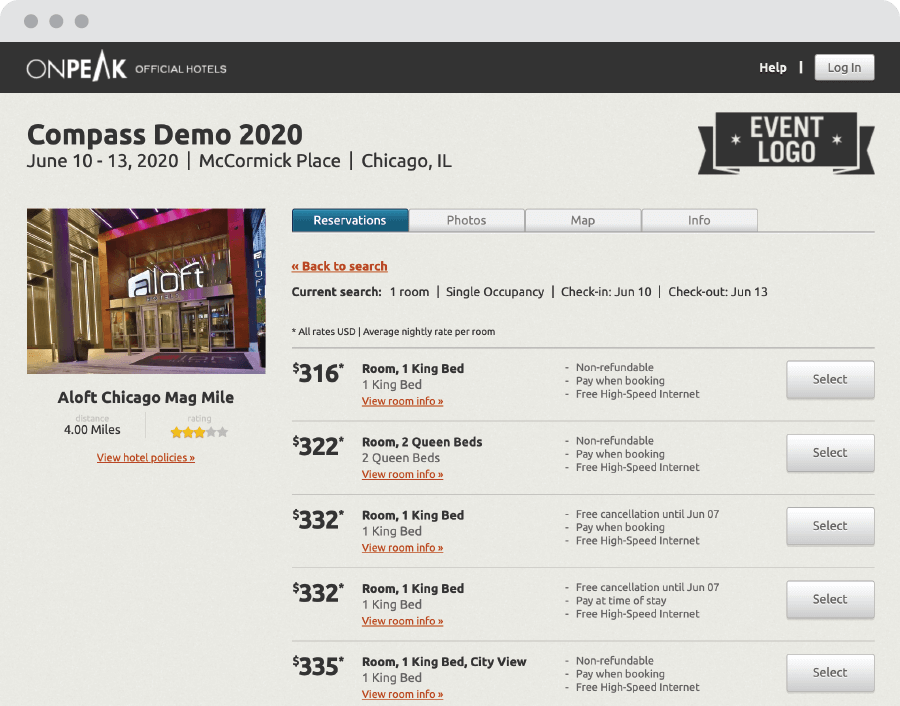 By collaborating with Expedia Partner Solutions, onPeak users now have access to special rate types and more flexible payment options, including the option to pay at the time of booking or at the hotel. The flexibility of the Compass Reservation System allows these hotel options to be added either as additional inventory options alongside event hotels or allow for event hotels to be sold via Compass Direct once sold out or cut off.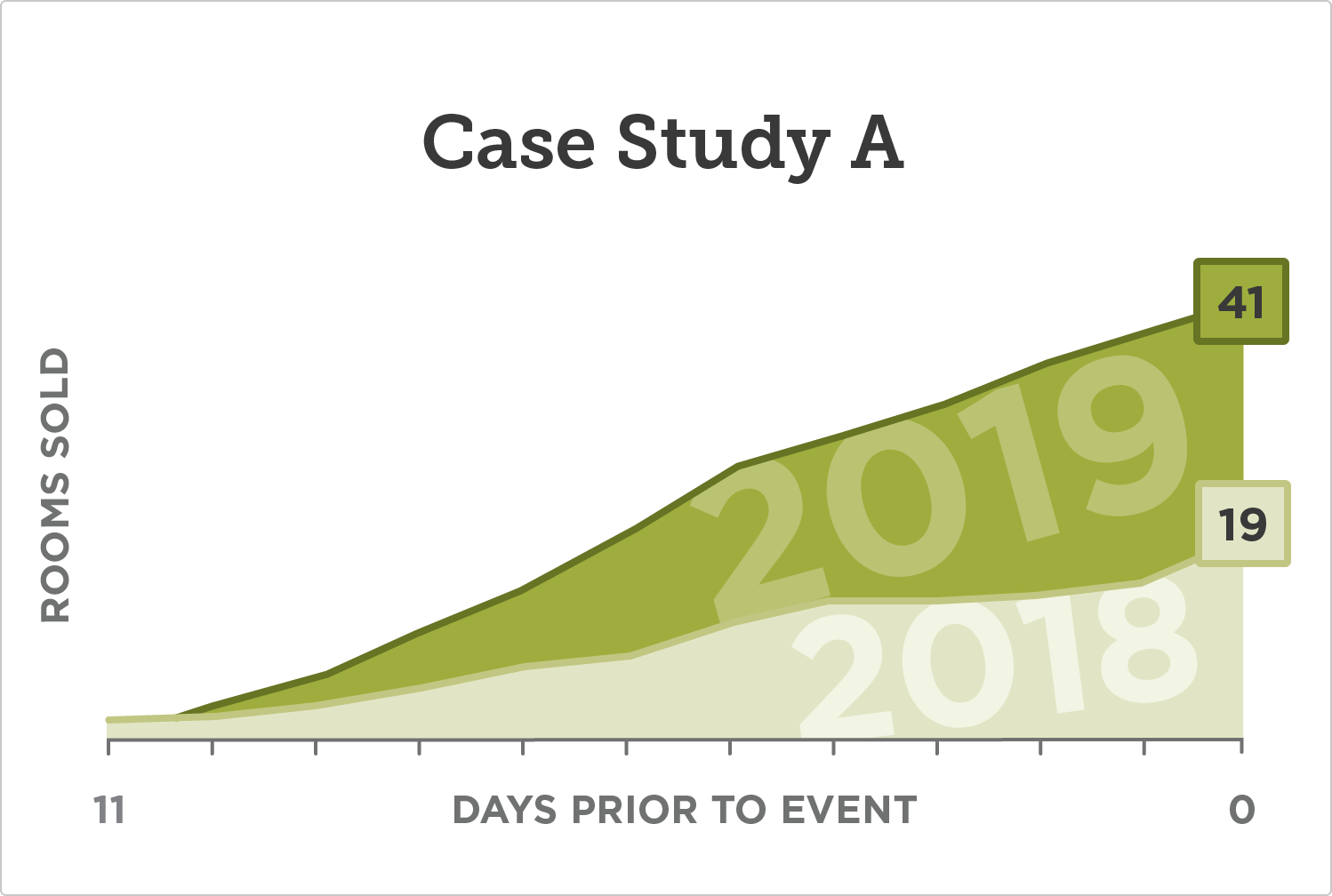
 As part of our collaboration with Expedia Group – we’re excited to introduce the option to sell alternate accommodations/vacation rentals through Vrbo. Reach out to your onPeak sales contact if you’re interested in learning more about this option for your events.